
Combining a Private Jet and Helicopter Charter for Seamless Travel +905525324848
For travelers arriving on a long-haul private jet, the final leg of the journey — getting from the airport to a hotel, villa, or yacht on the Bodrum Peninsula — can end up being the least private part of an otherwise entirely private trip. Combining a private jet and helicopter charter closes that gap, connecting a jet’s arrival directly to a helicopter departure so the entire journey, door to door, stays private and coordinated as one plan rather than two separate arrangements.
This article explains how a jet and helicopter combination actually works, what needs to align between the two legs for it to run smoothly, and what to think through when planning this kind of multi-aircraft journey. It also covers passengers, baggage, timing, and the realistic limits of what can be coordinated, since a jet-to-helicopter connection involves more moving parts than a single-aircraft charter.
What Is a Private Jet and Helicopter Combination?
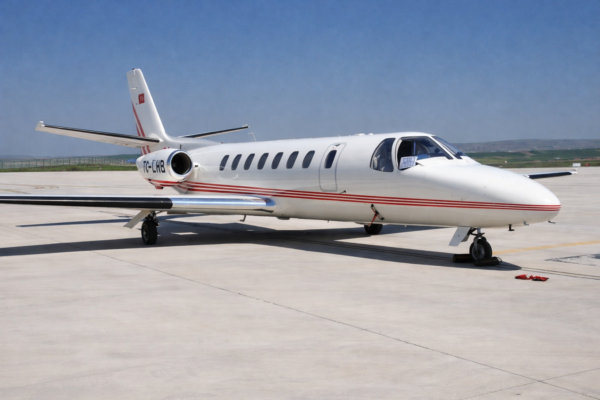
A private jet and helicopter combination pairs a fixed-wing jet charter, typically used for the longer-distance portion of a journey, with a helicopter charter covering the shorter final leg to a destination that isn’t well served by a commercial airport. Rather than booking each leg independently and hoping the timing lines up, a combined booking coordinates both aircraft together so the helicopter is ready and positioned for your jet’s actual arrival time.
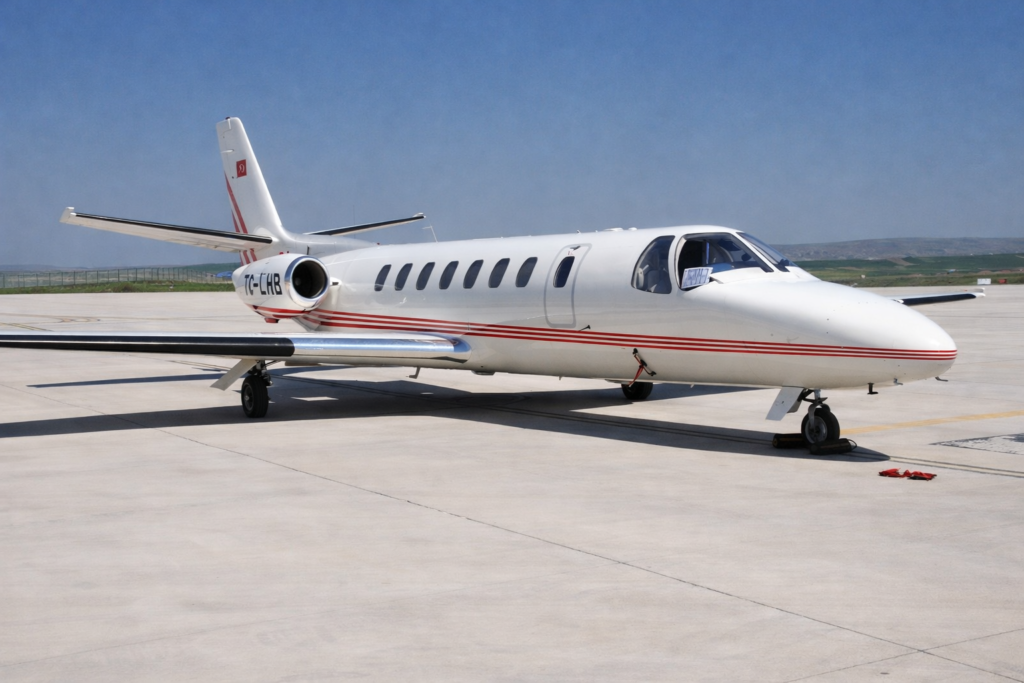
The two legs remain distinct services with their own aircraft, but planning them as a single coordinated journey means passenger details, baggage, and timing only need to be communicated once, and any change on one leg — a delayed jet arrival, for example — can be reflected in the other leg’s planning as well. Whether the overall journey is arranged one-way or return, and whether the connection happens at an airport, a dedicated jet terminal, or a heliport, depends on the specific airports and aircraft involved in your particular itinerary.
Who Typically Combines a Jet and Helicopter Charter?
This kind of combined journey tends to suit specific travel patterns rather than every type of trip:
- International travelers arriving by private jet who need to reach a destination on the Bodrum Peninsula or elsewhere in the region without a long road transfer
- Business travelers with a tight schedule connecting a long-distance jet leg with a short regional hop, similar in spirit to point-to-point routes such as an executive business flight between Bodrum and Istanbul
- Yacht owners and guests flying in privately before continuing to a marina by helicopter
- Families or small groups prioritizing a fully private journey from departure to final arrival
- Travelers whose final destination has no nearby commercial airport, making a helicopter connection the most practical option
Because each leg involves its own aircraft, capacity, and baggage rules, suitability for a combined booking is assessed for your specific itinerary rather than assumed to work the same way for every route.
What Is a Private Jet Charter, and How Does It Connect to the Helicopter Leg?
A private jet charter reserves a fixed-wing aircraft for your group’s exclusive use, typically for the longer-distance portion of a journey where a jet’s speed and range make more sense than a helicopter. Tesla Travel’s jet charter service can be arranged as the first or final leg of a combined journey, with the helicopter connection coordinated around the jet’s confirmed schedule.
The practical connection between the two happens at whichever airport or terminal the jet uses. Where a private aviation terminal is available, this can streamline the transition between aircraft; where it isn’t, standard airport arrival or departure procedures apply to that leg. Either way, the specific arrangement is confirmed as part of planning your itinerary rather than assumed to be identical at every airport.
Choosing the Right Aircraft for Each Leg
Aircraft selection works independently for each leg of a combined journey, though both are planned together as part of the same itinerary:
- For the jet leg: passenger count, baggage, distance, and range requirements for the specific route
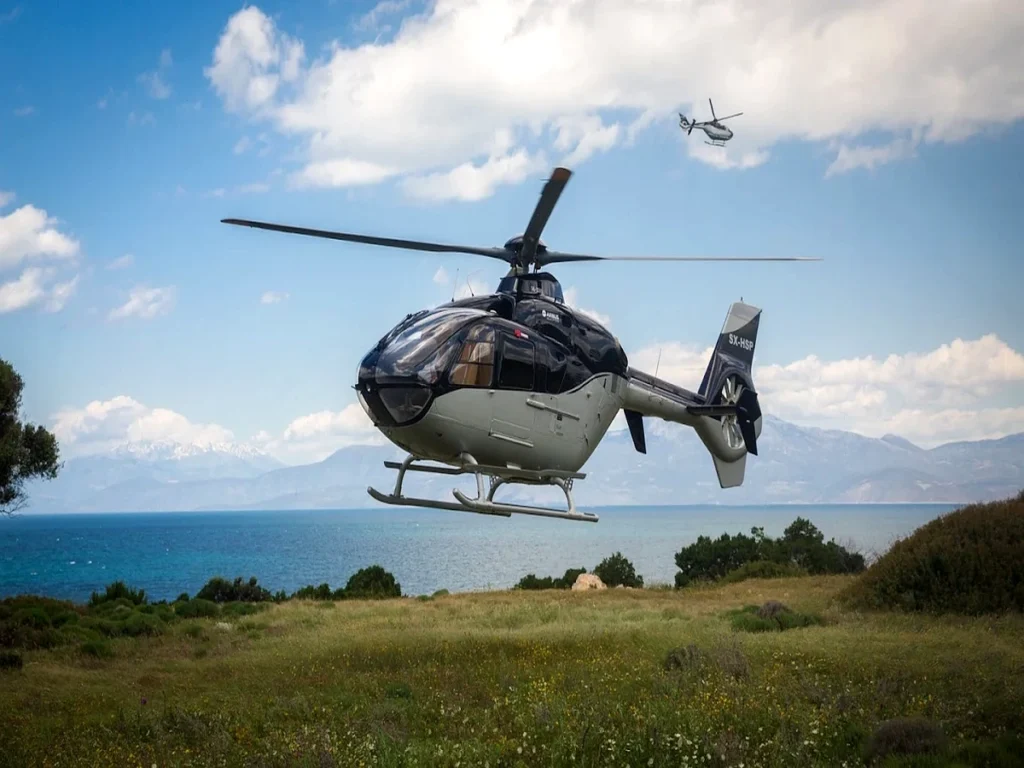
- For the helicopter leg: passenger count, baggage, distance to the final destination, landing-site requirements, and weather conditions expected
- Overall comfort expectations and budget across the full journey
- Availability of both aircraft types on your specific travel dates
- Any international considerations, particularly if the jet and helicopter legs cross different borders
Because availability and suitability depend on the specific route and dates involved, the aircraft used for each leg of your combined charter are confirmed once your full itinerary has been reviewed, rather than fixed in advance of a quote.
Consultation and Flight Planning
Planning a combined jet and helicopter journey involves gathering details for both legs together, so your coordinator can align timing and logistics properly:
- Preferred travel dates and times for each leg
- Departure airport for the jet leg, and final destination for the helicopter leg
- Number of passengers travelling
- Passenger names
- Approximate passenger weights
- Baggage count, dimensions and weight
- Passport details, since international jet or helicopter legs require this
- Hotel, villa, or marina details at the final destination
- Any ground transfer needs between the jet and helicopter, where relevant
- Special assistance requirements
Sharing complete details for both legs at the outset, rather than booking each separately, is what allows a coordinator to actually plan the connection between them rather than treating them as two unrelated bookings.
How Does the Booking Process Work?
The general sequence for a combined charter follows a similar structure to any private aviation booking, applied to both legs together: an initial enquiry outlining your full itinerary; confirmation of the specific route and dates for each leg; passenger and baggage details covering the whole journey; an assessment of landing-point suitability for the helicopter leg and airport suitability for the jet leg; an availability check for both aircraft; confirmation of any operator and permit considerations, particularly for international connections; a written quotation covering both legs; your review and acceptance; collection of required passenger documentation; a weather and operational review closer to your travel date; final departure details for both legs; check-in and boarding for each aircraft in turn; and the flights themselves, followed by any onward ground transfer arranged as part of the booking.
Because two aircraft and potentially two sets of ground logistics are involved, this process typically benefits from more advance planning than a single-aircraft charter, particularly for international itineraries.
Departure Points, Airports and Heliports
Not every airport has a private aviation terminal, and not every final destination has a landing point that’s suitable or approved for helicopter use. A workable combined itinerary depends on confirming both ends properly: the jet leg needs an airport capable of handling the aircraft and any private terminal facilities being used, while the helicopter leg needs a landing point with confirmed legal permission, site suitability, operator approval, and the other factors that apply to any helicopter departure or arrival.
Where a direct landing point isn’t available at your final destination, the helicopter leg may instead route through the nearest suitable heliport or airport, with ground transportation covering the remaining distance. This should be clarified early in the planning process, since it directly affects total journey time.
Passenger Capacity and Baggage Across Two Aircraft
Passenger capacity and baggage limits are assessed separately for each leg, since a jet and a helicopter have different cabin configurations and weight-and-balance considerations. It’s entirely possible for baggage that fits comfortably on the jet leg to need reorganizing before the helicopter leg, particularly if the group is transferring from a larger aircraft to a smaller one. Soft-sided bags remain easier to accommodate on the helicopter portion than large rigid cases, and any oversized items may need separate ground transport for that specific leg.
Because of this, it’s worth confirming baggage requirements for both legs individually rather than assuming a single baggage allowance applies across the entire journey.
Weather and Operational Considerations for Both Legs
Weather and operational decisions apply independently to each leg of a combined charter. A jet leg unaffected by weather at its destination doesn’t guarantee the helicopter leg will proceed as planned if conditions at the final landing point are unsuitable, and vice versa. The final decision on each leg rests with its respective pilot and operator, based on conditions at the time.
This means a combined itinerary can, in some circumstances, see one leg proceed on schedule while the other faces a delay, a changed landing point, or rescheduling. Building some flexibility into your overall itinerary, particularly around the connection point between the two aircraft, is generally a sensible approach for this type of journey.
How Much Does a Jet and Helicopter Combination Cost?
Cost for a combined charter reflects both legs together: aircraft type and availability for the jet portion, aircraft type and distance for the helicopter portion, passenger count, positioning requirements for either aircraft, landing and handling fees, any international permits, taxes, and ground transfers between the two legs. Because two aircraft are involved, a written quotation covering the full itinerary is the most reliable way to understand total cost, and should set out the aircraft, capacity, and terms for each leg individually alongside the overall journey.
Jet and Helicopter Combination vs. Other Options
For travelers weighing a combined jet and helicopter journey against alternatives, the comparison generally comes down to total door-to-door time, privacy across the full journey, and cost. A commercial flight connection followed by a private car can be considerably less expensive but introduces more waiting time, less privacy, and dependency on commercial schedules. A combined private charter removes those inefficiencies but requires more coordination and generally represents a higher overall cost, making it best suited to travelers for whom privacy and time across the entire journey are genuine priorities rather than a single leg.
Frequently Asked Questions
Can I combine a private jet arrival with a helicopter connection to my final destination?
Yes, this can be arranged as a single coordinated itinerary, subject to aircraft availability and landing-point suitability at your final destination. Both legs are confirmed together as part of the booking process.
Does Tesla Travel operate the private jet as well as the helicopter?
Tesla Travel coordinates private jet charter and helicopter transfer services as part of its private aviation offering; specific operator arrangements for any given aircraft are confirmed as part of your booking.
How much does a combined jet and helicopter journey cost?
Cost depends on the aircraft used for each leg, distance, passenger count, and various fees and taxes. A written quotation covering both legs is the most reliable way to understand total cost for your specific itinerary.
What happens if my jet arrival is delayed?
Your flight coordinator can adjust the helicopter leg’s timing where possible, though this depends on aircraft availability at the time. Sharing your jet’s flight details in advance helps with this coordination.
Can baggage be transferred directly between the jet and the helicopter?
In many cases, yes, though baggage limits differ between the two aircraft. Confirming baggage details for both legs individually helps avoid issues at the connection point.
Do I need a passport for a combined jet and helicopter journey?
If either leg crosses an international border, valid passport documentation is required for that leg. Requirements should be confirmed based on your specific route.
Is this type of combined charter available for last-minute bookings?
This is generally harder to arrange on short notice than a single-aircraft charter, since two aircraft and their coordination both need to be confirmed within the available time.
Can children travel on both the jet and helicopter legs?
This depends on the child’s age, seating and restraint requirements, and each aircraft’s configuration, which should be confirmed for both legs as part of your booking.
What happens if weather affects one leg but not the other?
Each leg operates subject to its own weather conditions and operational decisions. It’s possible for one leg to proceed on schedule while the other faces a delay or change, so some flexibility around the connection is advisable.
Can this type of journey include an onward ground or sea transfer as well?
Yes, a combined itinerary can include ground or sea transfer arrangements at either end, coordinated as part of the overall booking alongside the jet and helicopter legs.
Planning a Coordinated Journey
A private jet and helicopter combination works best when both legs are planned together from the outset, with passenger details, baggage, and timing shared for the full itinerary rather than each leg booked separately. Given the additional coordination involved across two aircraft, allowing sufficient lead time and confirming landing-point suitability early makes a meaningful difference to how smoothly the connection runs. For a specific jet and helicopter itinerary, requesting a written quote that covers both legs together is the most reliable way to see what’s realistically achievable for your journey, and Tesla Travel’s jet charter and concierge services can be discussed together as part of the same planning conversation.