
Istanbul airport to sabiha gökçen helicopter transfer: How an ist to saw connection really works +90 505 707 4848
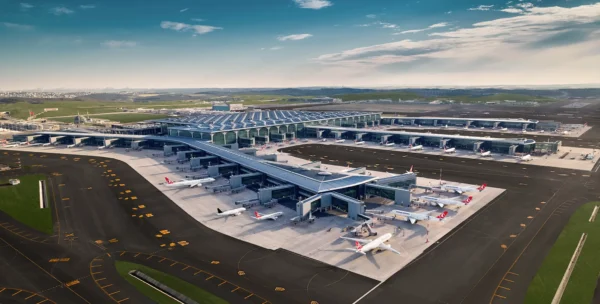
Istanbul has two international airports, and they sit on different continents. Istanbul Airport (IST) is on the European side, north-west of the city centre. Sabiha Gökçen Airport (SAW) is on the Asian side, in Pendik. Travellers who land at one and depart from the other face a road journey of roughly 85 kilometres that has to cross the Bosphorus, and the time it takes can change dramatically from one hour of the day to the next.
An Istanbul Airport to Sabiha Gökçen helicopter transfer replaces the longest and least predictable part of that journey with a private flight. It is not a magic shortcut, and it is not the right answer for every passenger. This guide explains what an IST to SAW helicopter transfer includes, where it can realistically depart and land, how to think about connection time and baggage, and what to send when you ask for a quote.
WHAT AN IST TO SAW HELICOPTER TRANSFER IS
An IST to SAW helicopter transfer is a private charter flight arranged for your party alone. It is not an airline service, it is not a scheduled shuttle with seats sold individually, and it is not part of your airline ticket. Tesla Travel Istanbul Helicopter Services coordinates the enquiry, the quotation and the ground arrangements, while the flight itself is performed by the aviation operator and crew assigned to your booking.
The service works in both directions. A SAW to IST helicopter transfer follows the same planning logic, with the arrival and departure procedures reversed.
This guide deals only with the airport-to-airport connection. If you are travelling from either airport into the city, to a hotel or to a business district, our guide to the Istanbul Airport helicopter transfer covers that journey. For multi-stop days and wider private flying around the city, see our page on helicopter charter in Istanbul.
WHY THE ROAD BETWEEN ISTANBUL’S TWO AIRPORTS IS SO HARD TO PREDICT
On a map, the two airports look comfortably linked by motorway. In practice the route combines a long distance, a Bosphorus bridge crossing and the traffic patterns of one of the largest cities in Europe. A private car that completes the journey smoothly late at night can take far longer during a weekday rush hour, and a single incident on the bridge approaches affects everything behind it. A direct airport coach also runs between the two airports, and rail options exist with changes along the way, but none of them removes the uncertainty of crossing the entire metropolitan area.
For most travellers that uncertainty is an inconvenience. For a passenger holding two separate tickets, with a second flight that will not wait, it is a genuine risk. That is the situation an inter-airport helicopter transfer is designed for.
WHO BOOKS A HELICOPTER BETWEEN IST AND SAW
This transfer tends to suit a narrow but clearly defined group of travellers. The first is passengers on separate tickets who arrive on one airline at IST and continue on another from SAW, or the reverse, and who cannot rely on an airline to protect the connection. The second is private jet passengers who land at one airport and continue on a scheduled flight from the other. The third is executives and small delegations whose day in Istanbul is built around fixed appointments on both sides of the Bosphorus. The fourth is VIP guests and families who simply prefer not to spend the middle of a long travel day in a car.
It suits other travellers less well. Large groups, passengers with several heavy suitcases each, travellers on a tight budget and anyone arriving late in the evening should read the sections on baggage and operating limits below before assuming a helicopter is the better option. In some of those cases a well-planned private car is the more sensible choice, and a good coordinator will tell you so.
WHERE THE HELICOPTER CAN DEPART AND LAND
This is the question that decides whether the transfer makes sense, and it should never be assumed.
A helicopter does not collect passengers from the kerb outside arrivals, and it does not normally deliver them to the door of the departures hall. Each end of the flight needs a landing point that is legally permitted, physically suitable, approved by the operator and available on your date and at your time.
At Sabiha Gökçen, the airport’s official passenger guide states that its General Aviation Terminal serves passengers travelling by business jet, private jet, helicopter and charter aircraft, and that it is located next to the Terminal 1 building. That confirms helicopter passengers are handled at SAW. It does not mean that every flight, operator or time slot will be accepted, and handling arrangements are confirmed booking by booking.
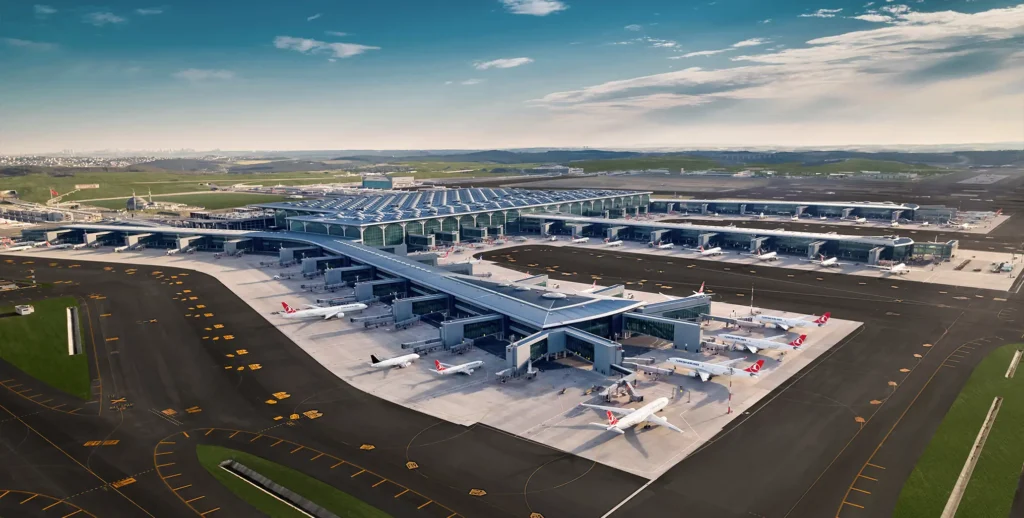
At Istanbul Airport, the operator iGA and Jetex inaugurated the Jetex iGA Terminal in May 2026 as a dedicated facility for private jet travellers and for commercial airline passengers by reservation. Whether a helicopter movement for your transfer can use the airport itself, or whether the flight will use an approved heliport or general aviation site nearby with a ground transfer to the terminal, depends on the operator, airport permissions, slots and airspace conditions on the day.
For that reason Tesla Travel does not promise direct apron access, a specific heliport or a terminal-door arrival in advance. Your written quotation states the confirmed departure point, the confirmed landing point and any ground transfer included at either end.
AIRBORNE TIME IS NOT DOOR-TO-DOOR TIME
The most common planning mistake is to compare a helicopter’s time in the air with a car’s time on the road. The flight is only one part of the connection.
A realistic IST to SAW helicopter transfer includes all of the following stages. Your inbound flight lands and taxis to its stand. If you arrive on an international flight, you clear passport control. You collect checked baggage and pass customs. You are met and taken by road to the helicopter boarding point, wherever that has been confirmed. You complete identity checks, a baggage and weight check and a safety briefing, then board. The helicopter flies the route approved by air traffic control. After landing you transfer by road to the departures terminal. You then check in or drop your bags, pass security and, for an international departure, clear passport control again before walking to the gate.
Only one of those stages is flown. The time spent in the air is considerably shorter than the road journey between the two airports, but the stages on the ground at each end do not disappear. The estimated flight time for your aircraft and route is given in your quotation, and it should always be read together with the ground stages around it.
HOW MUCH CONNECTION TIME DO YOU NEED?
There is no universal minimum, and any company that quotes one without knowing your flights is guessing. The time you need depends on whether each flight is domestic or international, your nationality and any visa requirements, whether you have checked baggage, your airline’s check-in and bag-drop deadlines, how far your arrival stand is from the terminal exit, where the helicopter boarding and landing points are confirmed, and the weather and air traffic situation on the day.
Two practical rules follow. First, contact a coordinator before you buy the second ticket, not after, so the connection can be assessed with real flight numbers. Second, remember that a helicopter transfer reduces risk on the longest segment but does not guarantee that you will make an onward flight. A late inbound arrival, a long passport queue or a weather hold can still break a tight connection, and missed-flight costs are not covered by the charter.
BAGGAGE: THE DETAIL THAT CHANGES EVERYTHING ON THIS ROUTE
Inter-airport passengers usually travel with full airline luggage, and this is where the IST to SAW route differs from a sightseeing flight or a short hop with a cabin bag.
Baggage capacity on a helicopter depends on the aircraft and its cabin configuration. Passenger weights and baggage weights are assessed together in the operator’s weight-and-balance calculation, so the same aircraft may accept a different load on different flights. Large rigid suitcases may not fit the baggage compartment at all, while soft-sided bags are generally easier to place. Final acceptance always rests with the operator, and a change of aircraft can change what is accepted.
When the luggage exceeds what the aircraft can carry, the usual solution is a separate vehicle that takes the bags by road. On most routes that is a minor detail. Between IST and SAW it matters a great deal, because your checked bags must reach the bag-drop desk before the airline’s deadline, and a suitcase travelling by road is exposed to exactly the traffic you were trying to avoid. If you arrive at the terminal well before your luggage, you have gained very little.
So be exact. Send the number of bags, their dimensions and their weights with your first message. If everything can fly with you, the transfer delivers its full benefit. If it cannot, your coordinator can tell you honestly whether a helicopter still makes sense. Our guide to helicopter baggage allowance and passenger capacity explains the principles in more detail.
WEATHER, AIRSPACE AND YOUR PLAN B
Both ends of this flight sit inside the controlled airspace of busy international airports, and the route between them crosses a dense city and the Bosphorus. Routing and timing are subject to air traffic control, and to any temporary airspace restrictions in force on the day.
Weather is assessed for every flight. Visibility, cloud base, wind, gusts, precipitation and thunderstorms are all considered at both airports and along the route, and conditions at IST can differ noticeably from conditions at SAW. The pilot and operator make the final decision, and a passenger’s schedule never overrides it. Daylight and night operating limits also apply, so an evening or night-time connection should not be assumed to be available and may only be possible upon request and operational confirmation.
Because this transfer protects an onward flight, a Plan B is part of the plan from the start. Ask for a road vehicle to be held as a backup, and agree in advance at what point the decision between flying and driving will be made. A backup vehicle may be available upon request, so that a weather hold becomes a slower journey rather than a missed connection wherever possible.
HELICOPTER, PRIVATE CAR OR AIRPORT COACH?
A private car offers true door-to-door travel, takes all your luggage and costs far less, but its journey time is exposed to bridge and motorway traffic. The airport coach is the most economical option and suits travellers with generous connection times and no fixed deadline. A helicopter is the most expensive of the three and the most sensitive to weather, but it removes the cross-city road segment from the equation.
The helicopter is strongest when your connection is fixed, your road window falls in peak traffic, your party is small and your luggage can fly with you. It is weakest when you have plenty of time, a large group or heavy baggage.
WHAT DETERMINES THE PRICE
There is no fixed public tariff for this route, and any single figure would be misleading. The price of an IST to SAW helicopter transfer depends on the aircraft type and its availability, where the aircraft has to be positioned from, the confirmed departure and landing points, landing and handling fees, passenger count, waiting time if your inbound flight is delayed, ground transfers and any luggage vehicle, taxes, and how busy the date is.
Your written quotation should state the aircraft type, passenger capacity, baggage conditions, departure and landing points, estimated flight time, what is included and excluded, waiting-time terms, and the cancellation and weather conditions. You can start that process through Tesla Travel’s live quote page.
WHAT TO SEND WHEN YOU REQUEST A QUOTE
To assess the connection properly, your coordinator needs the date of travel; your arrival airport, airline and flight number; your departure airport, airline, flight number and scheduled departure time; whether each flight is domestic or international; the number of passengers, including any children; passenger names and approximate weights; the number, dimensions and weights of all bags; passport or ID details as required by the operator; any mobility or special assistance needs; and whether you want a road vehicle held as a backup.
Sending everything in one message allows availability, landing-point and permission checks to run at the same time rather than one after another.
FREQUENTLY ASKED QUESTIONS
Is there a helicopter transfer from Istanbul Airport to Sabiha Gökçen?
Yes, a private helicopter transfer between IST and SAW can be arranged on request, subject to aircraft availability, approved departure and landing points, permissions and weather. It is a private charter, not a scheduled service.
How long does the helicopter flight between IST and SAW take?
The airborne time is much shorter than the road journey, but it varies with the aircraft, the approved route, air traffic control and the confirmed landing points. Your quotation gives an estimate for your flight, and you should add the ground stages at both airports to understand the full connection.
Will the helicopter pick me up directly at the terminal?
Not at the kerb. Boarding takes place at a confirmed and approved point, which may be an airport general aviation facility or a nearby heliport. A short ground transfer at one or both ends may be required and will be shown in your quotation.
Can I bring all my checked luggage?
Only if the assigned aircraft can accept it within its weight-and-balance limits. Declare every bag in advance. Excess or oversized luggage may need to travel by road, which affects when it reaches the bag-drop desk.
Does a helicopter guarantee that I will catch my onward flight?
No. It reduces the uncertainty of the cross-city segment, but inbound delays, immigration queues, airline deadlines and weather remain outside the control of the charter.
Can the transfer be arranged at night?
Night and low-light operations are subject to specific limitations and approvals. Evening and night requests may be available upon request and operational confirmation, and should never be assumed.
What happens if the weather is unsuitable?
The pilot and operator decide. The outcome may be a delay, a revised route or landing point, or cancellation. A pre-arranged road vehicle is the recommended backup for any time-critical connection.
Can I combine this with a private jet arrival or an onward flight to Bodrum?
Yes, multi-leg plans can be coordinated, with each leg confirmed separately. See our guide to combining a private jet and helicopter charter, and the Bodrum to Istanbul helicopter route if your journey continues south.
How far in advance should I book?
As early as your flights allow, and ideally before you purchase the second ticket. Last-minute requests can sometimes be accommodated, but they depend entirely on aircraft availability and approvals.
PLANNING YOUR IST TO SAW CONNECTION
A helicopter transfer between Istanbul Airport and Sabiha Gökçen is a specialist solution to a specific problem: a fixed onward flight on the far side of a very large city. It works best when it is planned around real flight numbers, exact baggage details and a confirmed landing point at each end, with a road backup already in place.
Tesla Travel will tell you what is achievable for your date and, just as importantly, when a private car is the wiser choice. To check availability, send your two flight numbers, passenger count and baggage details through the live quote page, or contact Tesla Travel Istanbul Helicopter Services on +90 555 455 68 22.