
Air Ambulance Helicopter Services: Bodrum & the Greek Islands +90 552 532 4848
If you’re on a yacht anchored off Kos, staying in a villa on Mykonos, or based in Bodrum and something goes seriously wrong medically, the nearest hospital capable of treating it may not be on the island you’re standing on. This is the reality behind one of the busiest and least-discussed corners of Aegean private aviation: helicopter air ambulance transport between the Bodrum Peninsula and the Greek islands. This guide explains how it actually works, what determines response time, and how to have a plan in place before you need one.
Why This Corridor Matters
The Bodrum Peninsula sits directly opposite a chain of Greek islands — Kos, Rhodes, Leros, Kalymnos, and beyond — that are, in some cases, only a 20-minute flight away by helicopter, but hours by ferry and road, and served by hospitals with widely varying levels of capability. Small island clinics are generally equipped for routine care and initial stabilisation, not major trauma, cardiac events, or complex surgery. When a patient needs a higher level of care fast, the geography of the region — water crossings, mountainous terrain, and limited road infrastructure on smaller islands — makes helicopter transport dramatically faster than any ground or sea alternative.
How Helicopter Air Ambulance Transport Works
Public vs. Private Medical Air Transport
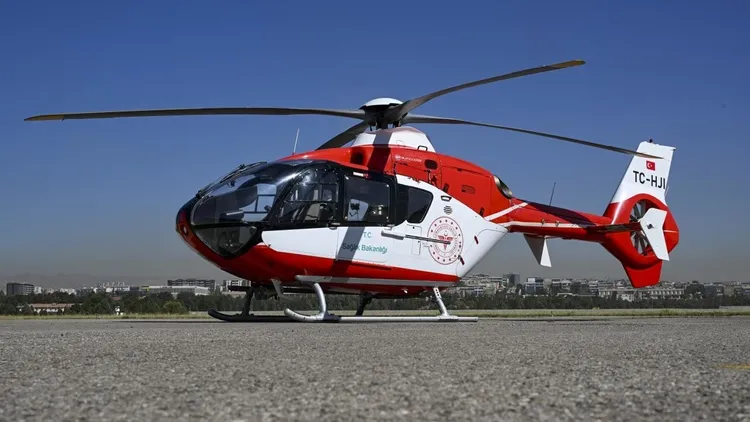
In Greece, the national emergency system (EKAB) coordinates urgent medical evacuations for critically ill patients through public resources, generally prioritized by medical severity and public system capacity. Private helicopter and air ambulance providers complement this system, offering additional flexibility, availability, and dedicated response, particularly useful for less time-critical inter-hospital transfers, international patients, insurance-coordinated repatriation, or situations where private-sector speed and clarity of pricing matter.
What a Medical Transfer Actually Involves
- Assessment and clearance — the sending clinic or physician confirms the patient is fit to fly and specifies the level of medical support required
- Aircraft and crew matching — a suitable helicopter is arranged, along with any required medical escort, depending on patient condition
- Point-to-point or relay transport — a direct flight to a hospital with a helipad, or a shorter hop to Bodrum’s Milas International Airport for onward fixed-wing transfer if the destination is further away
- Ground coordination at both ends — ambulance transfer from clinic to helipad, and from landing point to receiving hospital
Bodrum–Greek Islands Response Times: What to Expect
| Route | Approx. Flight Time | Typical Use Case |
|---|---|---|
| Kos to Bodrum | 15–20 minutes | Rapid transfer to a larger facility or onward international evacuation |
| Rhodes to Bodrum | 25–35 minutes | Inter-regional transfer where Bodrum offers faster onward connections |
| Smaller islands (Leros, Kalymnos) to Bodrum | 20–35 minutes | Transfer from limited island clinic capability to a better-equipped facility |
| Bodrum to Milas Airport (for onward fixed-wing) | Under 15 minutes | Connection point for long-distance medical repatriation |
Note: Actual response times depend on aircraft availability, weather, time of day, and medical clearance procedures, and can vary meaningfully outside peak summer season when fewer aircraft are positioned in the region.
What Determines the Type of Transport Used
- Patient condition — stable patients requiring inter-hospital transfer have different aircraft and crew requirements than critical, ventilated, or cardiac patients
- Distance to destination — helicopters are typically used for the regional leg; longer international repatriation usually switches to a fixed-wing air ambulance from Milas Airport
- Availability of a helipad — some hospitals and clinics have direct helipad access, reducing ground transfer time significantly
- Medical escort requirements — ranging from a single paramedic to a full doctor-nurse team for the most complex cases
Expert tip: If you or a family member has a known condition that could require urgent transfer while travelling in the region — a cardiac history, for example — confirming in advance which providers can respond in your specific area, and how quickly, is worth doing before you travel, not after something happens.
Planning Ahead: Who Should Consider This Before Traveling
- Yacht charter guests and crew — spending extended time between islands with variable proximity to major hospitals
- Villa and resort guests on smaller islands — where local clinic capability may be limited
- Residents and long-stay expats on the Bodrum Peninsula or nearby islands
- Travel insurers and concierge teams coordinating contingency plans for clients in the region
- Anyone with a pre-existing medical condition planning an island-hopping itinerary
How Tesla Travel Coordinates Air Ambulance Requests
Tesla Travel Agency, as the Aegean’s private aviation coordinator for the Bodrum–Greek islands corridor, works with licensed medical aviation and air ambulance providers to help arrange helicopter transport when a medical situation requires it — connecting the request with an appropriately equipped operator and helping coordinate ground logistics on the Bodrum side. This is distinct from our scheduled Helicopter Transfers Bodrum and route services, which are designed for planned, non-medical travel.
Expert tip: Response speed in a genuine emergency always depends on contacting the right resource immediately — for a critical, life-threatening emergency, contact local emergency services (112 in Greece and Turkey) first, and use private coordination for stabilised transfers, planning ahead, or when public capacity is constrained.
Frequently Asked Questions

1. How fast can a helicopter air ambulance reach me from a Greek island near Bodrum? Flight times from nearby islands like Kos or Rhodes to Bodrum typically range from 15 to 35 minutes, though actual response time also depends on aircraft positioning, weather, and medical clearance.
2. What’s the difference between a helicopter air ambulance and a private helicopter transfer? A medical air ambulance involves a patient assessment, appropriately equipped aircraft, and often a medical escort, coordinated with receiving hospitals. Private helicopter transfers are for non-medical, planned travel.
3. Can a helicopter fly a patient directly from a Greek island to Bodrum? Yes, where flight conditions, aircraft range, and hospital helipad access allow. In many cases, Bodrum also serves as a connection point to Milas Airport for onward fixed-wing transport if further international transfer is needed.
4. Who coordinates emergency medical air transport in this region? In Greece, the national EKAB system coordinates public emergency evacuations. Private providers and coordinators, including Tesla Travel, offer additional options for inter-hospital transfers, international patients, and insurance-coordinated cases.
5. Should I call emergency services or a private coordinator first? For a genuine life-threatening emergency, contact local emergency services (112) immediately. Private coordination is best used for stabilised transfers, advance planning, or when additional flexibility is needed.
6. Does travel insurance cover helicopter medical evacuation in this region? Many comprehensive travel insurance policies cover medical evacuation, but coverage varies significantly by policy. Confirm your specific coverage, including for helicopter transport, before you travel.
7. What happens if the nearest island hospital can’t treat my condition? The sending physician or clinic will typically coordinate transfer to a better-equipped facility, which may involve helicopter transport to Bodrum or onward fixed-wing transfer for more specialised or distant care.
8. Is this service available year-round? Aircraft availability tends to be strongest during peak season (May–September) when more aircraft are positioned in the region, though transport can typically still be arranged outside these months with additional lead time.
9. Can this be arranged in advance for a planned medical concern? Yes. Travelers with known medical conditions, or those planning extended island-hopping itineraries, often arrange contingency coordination in advance rather than waiting until a situation arises.
10. Does a helicopter air ambulance require a hospital helipad? Not always — where a helipad isn’t available, ground ambulance coordination bridges the gap between the nearest safe landing point and the hospital or clinic.
Plan Ahead, Fly Faster When It Matters
Whether you’re arranging contingency coverage for a yacht charter, a villa stay on a smaller island, or simply want to understand your options before travelling through the region, Tesla Travel can help you understand what’s available and connect you with the right medical aviation provider before you need it.
Contact Tesla Travel to discuss air ambulance coordination for your trip to Bodrum or the Greek islands. +90 552 532 4848